
Understanding the Federal Budget Process
From the President’s Budget Request to Appropriations that Impact Research and Children
What is the federal budget process?
The federal budget process is how the President and Congress decide what the federal government funds each year—from scientific research to education to programs that support children and families. While it’s often described as complex (and it is), the core idea is straightforward: the President proposes a vision for spending, and Congress decides what actually gets funded through a series of appropriations bills.
Each year’s decisions shape roughly $1.9 trillion in discretionary investments, including many of the research programs and services that matter most to the SRCD community.
How does the process actually work?
At a high level, the process follows a predictable rhythm:
- The President releases a budget proposal (usually in February)
- Congress sets an overall spending framework
- Lawmakers write and debate 12 funding bills
- The House and Senate negotiate final versions
- The President signs them into law
In reality, these steps often overlap, stall, or restart—especially in today’s political environment.
What’s most important to know?
- Congress controls annual funding for research and many child-serving programs through “appropriations.”
- Not all federal spending is decided this way—major programs like Medicaid are funded automatically under existing law.
- The process is supposed to wrap up by October 1, but delays are common, often leading to temporary funding measures or shutdown threats.
- The most consequential decisions typically happen within the Appropriations Committees—this is where SRCD can have the biggest impact.
Why this matters for researchers and children:
Federal budget decisions don’t just determine numbers on a spreadsheet—they shape what research gets funded, which programs expand or contract, and how well children and families are supported across the country.
And importantly, these decisions are not fixed. Advocacy from the research community—including SRCD members—has influenced outcomes in meaningful ways, even in years where major funding cuts were initially proposed.
Understanding the Federal Budget Process
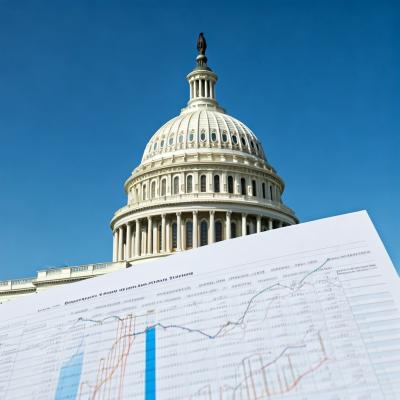
The U.S. Congress approves a federal budget each year through a complex process of making “appropriations” involving advice from the President, input from millions of people and special interests (including SRCD), negotiations and final passage. The federal budget shapes $1.9 trillion in annual investments in scientific research, health, education, housing, and other programs that affect children, youth, and families.
This SRCD Toolkit walks you through how the budget is passed each year and how to make your voice heard. Your voice makes a difference! In the most recent federal budget, SRCD science advocacy efforts with Congress helped turn a Presidential request to cut the National Institute of Health by 40% into an increase in scientific funding.
Quick Guide
A SRCD Quick Guide to the Federal Budget Process will provide a fuller understanding of how Congress and the President consider and pass funding for science, research and children’s programs. This Guide will cover key terminology, the budget process, appropriations, and the highest leverage opportunities to get your voice and interests heard.
Take Action
SRCD’s Policy Team and SRCD members engage in science policy advocacy to shape the federal budget toward our community’s priorities. We host advocacy days on Capitol Hill, sign-on to coalition letters and campaigns, and directly relay member interests and concerns. We are particularly focused on expanding funding for scientific research in social and behavioral sciences, investments in the research workforce and enterprise, and access to programs that support children’s education, health, and well-being.
We engage with partners such as the Consortium of Social Science Associations (COSSA) and the Federation of Associations in Behavioral & Brain Sciences (FABBS).