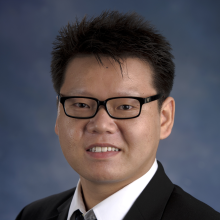
Dr. Chenyi Zhang is an Associate Professor in the Department of Early Childhood and Elementary Education at Georgia State University. With over a decade of expertise in the developmental sciences, Dr. Zhang’s scholarship sits at the vital intersection of developmental psychology, literacy, and early childhood education. A cornerstone of his research is a deep commitment to supporting early literacy across diverse cultural landscapes through promoting the quality of adult-child interaction processes. Dr. Zhang collaborates with educators and policymakers both in the U.S. and internationally to cultivate inclusive classroom environments that honor the linguistic wealth and cultural legacy of AAPI families. Beyond early literacy research, Dr. Zhang is pioneering investigations into the integration of Artificial Intelligence (AI) in early childhood settings.
His current projects examine how Generative AI can be ethically leveraged to enhance teacher-child interactions, specifically within shared reading and joint writing experiences. Grounded in developmental science, his work aims to ensure that emerging technologies remain culturally responsive to the needs of all children. Dr. Zhang earned his Ph.D. in Human Development and Family Studies from Purdue University and his M.S. from the University of Missouri. Dr. Zhang received National Academy of Education/Spencer Foundation Post-doctoral fellowship in 2016. An active member of the SRCD community since 2006, he has served in various SRCD research and service committees. He has also served as a Horowitz Early Career Mentor supporting students and early career scholars, and as Treasurer for the SRCD Asian Caucus.
Why did you decide to choose developmental science as a course of study or career?
A: In many ways, I feel that developmental science didn’t just become my career. It chose me. Coming from a family and a community of teachers, I was raised to see the world through the lens of growth and potential. I witnessed how quality personal relationships, particularly between teachers and students, shape a child’s development. This upbringing taught me that while everyone develops in a unique way, the quality of our human relationships is the catalyst that allows those unique gifts to manifest. Developmental science is a field fundamentally rooted in hope and infinite possibility. To study development is to intrinsically believe in the potential of each individual. I have always felt deeply valued and encouraged in this field because we are driven by the search for truth regarding human nature and how we can most effectively interact with our world. By supporting children, we aren’t just conducting research, but engaging in the most effective way to manifest a brighter future. Being a part of a professional community that values human interactions and relationships as much as the data itself has made this more than just a career for me. It is a calling focused on building a world where every child’s potential can flourish.
Why did you join SRCD and how does it facilitate connection among members all year long?
A: My introduction to SRCD was actually a bit of a misunderstanding— In middle school in China. When I was just beginning to learn English in 6th grade (in the early 90s, schools only started teaching English in middle school), I visited a foreign-language bookstore in my hometown that sold random imported U.S. publications. I saw the words 'Child Develop' on a cover because the word 'development' was still too difficult for me, knowing only a few words, I thought it must be a fun, illustrated book for "child". It turned out to be an issue of the Child Development journal! (back then, I had no idea what a journal was). To my middle-school eyes, it was a 'boring' book with absolutely no pictures of Looney Tunes! Looking back, that encounter was clearly a sign!
I officially joined SRCD the first year I came to the US for graduate study, because it is the gold standard of the field. But I stay because it became my 'research home.' It is the place where I developed my identity through the authentic care of mentors like Dr. Karen Diamond, Dr. Douglas Powell, Dr. Catherine McBride, and Dr. Hiro Yoshikawa. These scholars didn’t just equip me with skills. They modeled how to carry the legacy of developmental studies forward by supporting the next generation. I have formed valuable partnerships with researchers from different countries. SRCD facilitates these connections all year long by turning conference introductions into lifelong partnerships and friendships that transcend geographical borders and cultural backgrounds.
Are there any publications or books you would recommend for development science (and why)?
A: In our current landscape of rapid technological shifts, my recommendation for colleagues is perhaps unconventional: I suggest returning to the foundational philosophy of individual development.
Lately, the increasing integration of AI technology in education has led me to critically interrogate the role of AI in human interaction and development. I’ve noticed that this technology is beginning to challenge many assumptions in developmental science, specifically regarding the forms and quality of interactions and socialization at home and in the classroom. As researchers, we are facing the daunting task of conceptualizing and operationalizing the "AI factor" in our designs and assessments, a process that can feel both overwhelming and deeply stressful. I highly recommend exploring the Taoist classic texts, such as the Dao De Jing and Zhuang Zi. In Dao De Jing (Chapter 11), there is a profound distinction made between "profitable adaptation" and "actual usefulness." It explains that while the material parts of a vessel are for adaptation, its true utility comes from the "void" or the space within. In other words, we must distinguish between AI as a tool for adaptation and the internal, human essence of development that remains our true "usefulness." The texts may also help us understand "development" as the process of forming connections to our surroundings and others without judgment, but with critical reflection. The positive outlook and deep respect for diversity found in these texts align with SRCD’s core values. They encourage us to recognize that everyone has a unique path and "gifted" potential, regardless of the tools we use to measure them. For any researcher feeling the weight of AI’s risks and fast advancement, these texts offer a grounding, positive lens. They remind us that while our research methods must evolve to capture the new phenomenon emerged in human-technology dynamics, our core mission, seeking the truth of human nature and the quality of our relationships, remains timeless.