
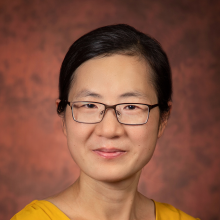
Dr. Yang Hou is an Assistant Professor and Director of the Development, Environment, and Resilience (DEaR) Lab in the College of Medicine at Florida State University. She earned her Ph.D. in Human Development and Family Sciences from the University of Texas at Austin and completed postdoctoral training in health psychology and neurobehavioral research at the National Cancer Institute.
Dr. Hou’s research examines biopsychosocial influences on neurobehavioral development—including cognitive, academic, socioemotional, and behavioral functioning—among underrepresented populations, including racial/ethnic minorities, low-income families, and individuals with rare genetic conditions such as neurofibromatosis type 1 (NF1). Her work leverages innovative and advanced quantitative methods to uncover patterns and predictors of neurobehavioral development across the lifespan. Her long-term goal is to inform scalable, data-driven interventions that improve neurobehavioral outcomes in individuals with NF1 and other underrepresented populations.
In addition to leading her research program, Dr. Hou contributes as a biostatistician on interdisciplinary teams and is committed to advancing developmental and clinical science through rigorous methodology, open science practices, and data sharing.
Dr. Hou has published over 60 peer-reviewed articles, and her research has been supported by the U.S. Department of Defense and the Children’s Tumor Foundation. She has received international recognition for her contributions, including the Rising Star Award from the Association for Psychological Science and the Early Career Outstanding Paper Award from the American Psychological Association. She currently serves as an Associate Editor for the Journal of Research on Adolescence.
Why did you decide to choose developmental science as a course of study or career?
A: I chose developmental science because of the questions I carried from my own upbringing. I grew up in a small, impoverished village in China, where only three of more than twenty children in my cohort attended college. Watching peers take very different life paths—including early parenthood, incarceration, and loss—sparked a deep curiosity about what shapes development and why trajectories diverge.
That curiosity led me to psychology and an initial career as a school psychologist. Through this work, I saw firsthand how children’s outcomes are shaped by their environments, but I also recognized the limits of individual-level intervention. I became increasingly interested in the broader social and contextual factors influencing development, which led me to pursue a Ph.D. in Human Development and Family Science.
Today, developmental science allows me to study these complex processes systematically and generate evidence to improve outcomes, particularly for underrepresented populations facing structural challenges.
What are you most proud of in your career?
A: I am most proud of building a research program that bridges developmental science, clinical research, and advanced quantitative methods to address meaningful, real-world challenges. My work on NF1 has helped address critical gaps in rare disease research by developing large, collaborative datasets, collecting innovative intensive longitudinal data, and applying advanced analytic approaches to understand neurobehavioral development across the lifespan. This work is beginning to generate actionable insights for clinicians and families.
Equally important to me is mentorship. I am proud to have created an inclusive and supportive training environment where students and trainees develop research, leadership, and critical thinking skills. Watching them grow into confident scholars and professionals is one of the most rewarding aspects of my career.
Do you have a mentor, or mentors, who have been instrumental to your career and, if so, who and how?
A: I have been fortunate to receive guidance from several outstanding mentors at different stages of my career. At the University of Texas at Austin, Drs. Su Yeong Kim and Aprile Benner provided a supportive academic “home,” where I developed foundational skills in scientific writing, quantitative methods, and grant development. Their mentorship shaped how I approach rigorous and impactful research.
During my postdoctoral fellowship at the National Institutes of Health, Dr. Pamela Wolters introduced me to clinical research and the field of neurofibromatosis type 1 (NF1), which became the foundation of my current research program. She also modeled how to conduct collaborative, patient-centered research.
More recently at Florida State University, Dr. Angelina Sutin has been an invaluable mentor and collaborator, offering generous guidance on grant writing, career development, and my work in aging.
What advice would you give to a student beginning their Ph.D. studies in developmental science or a related field?
A: My biggest advice is to stay curious about the questions that truly matter to you while being patient with the process. A Ph.D. is not just about acquiring knowledge—it is about learning how to think critically, ask meaningful questions, and persist through uncertainty. There will be moments of self-doubt and setbacks, but these are a normal and essential part of scientific growth.
I also encourage students to actively seek mentorship and build a strong support network. Different mentors can provide different perspectives—on research, career development, and work-life balance—and these relationships are invaluable.
Finally, when you start to doubt the meaning of your work, take time to reconnect with the communities you study and revisit the motivations that brought you here in the first place.