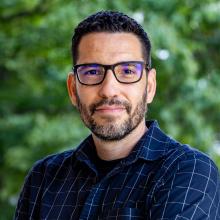
Bio:
Francisco Palermo is an Associate Professor in the Department of Human Development and Family Science at the University of Missouri. His research examines how children and families navigate adversity and how family and early learning environments can promote healthy development, school readiness, and resilience. His work focuses on the development and well-being of Latino children and families, with particular attention to language and literacy, self-regulation, and socioemotional development, including among children developing two languages. A central goal of his research is to identify strengths and resources within children, families, and communities that support children’s development and help families thrive. He collaborates with Head Start programs, early childhood educators, and state and community partners to translate developmental science into practice and policy.
Q: Why did you decide to choose developmental science as a course of study or career?
A: I have always been curious about why some individuals are able to overcome adversity and thrive, while others do not. My own experiences sparked this curiosity, and in college, courses in psychology and related fields introduced me to the science of human development. The more I learned about development, families, and research, the more interested I became in understanding the factors that shape children’s and families’ well-being. In graduate school, my interest became more focused as I learned about environmental, individual, and family strengths and support systems that can buffer the harmful effects of adversity on development and foster resilience. Developmental science provided a way to explore these questions while also identifying opportunities to strengthen families and promote positive outcomes for children. That combination of understanding development and using research to support children and families continues to motivate my work today.
Q: What are you most proud of in your career?
A: I am especially proud of building a research program around questions that genuinely matter to me and using research to make a difference in the lives of children and families. I especially value the partnerships I have developed with families, early childhood programs, and communities, as well as the opportunity to translate developmental science into practices and policies that support children and families.
Q: Do you have a mentor, or mentors, who have been instrumental to your career and, if so, who and how?
A: I have been fortunate to have mentors and colleagues who have shaped my career in different ways. Some have influenced me through their scholarship and research, while others have taught me through their approach to collaboration, mentoring, and service. I have learned that mentorship can take many forms and does not have to come from a single person or at a single stage of my career. These experiences have helped me think more broadly about my research, my career, and the kind of mentor I want to be. I am grateful to the many people who have shared their time, perspectives, and experiences with me and helped me become the scholar and mentor I am today.
Q: What advice would you give to a student beginning their Ph.D. studies in developmental science or related?
A: My advice would be to stay curious, develop strong methodological skills, and remain open to where your interests take you. Graduate school is an important time to explore questions that genuinely interest you and to develop the skills that will allow you to pursue those questions independently. You do not need to have your entire career figured out when you begin your Ph.D. Your research interests will evolve as you learn, and unexpected opportunities may lead you in directions you could not have anticipated. Do work that you care about and that gives you a sense of purpose. A career in developmental science is a long journey, and building a career around questions that matter to you makes that journey meaningful and rewarding.