
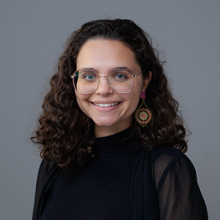
I am an Assistant Professor in the Department of Psychological and Brain Sciences at Texas A&M University. I am currently a Fulbright Finland Foundation and Tampere University Fellow (2025-2026) at Tampere University. In my research I investigate the developmental, social, and cultural processes that support individuals in being critical of social inequality and learning how to care for others. For instance, I am currently studying how children and adults are being systematically taught to care within the Finnish context.
What drew you to work on your current topic?
A: Growing up in Brazil, gender inequality was very salient to me. In particular, I was interested in family roles, and how to encourage individuals to be critical of them. Most of the research in family labor had focused on adults, and as a moral developmental scholar I was interested in how children growing up in gender unequal households came to be critical or accepting of this inequality. In my fieldwork observing and interviewing children and families in South Korea and China I came across the framing of family labor as a form of care labor. I realized that not everyone framed inequality as unfairness, and that a few participants instead focused on the relational aspects of labor as care. I thus became interested in studying how individuals across cultures approach care and why some learn to care in certain ways while others do not.
What words of wisdom might you pass on to someone on their very first day after deciding to get a Ph.D. in developmental science or a related field?
A: There is an expression in Portuguese " Quem tem boca vai a Roma" meaning who has a mouth gets to Rome. In other words, who asks questions, turns to others, communicates, can get to where they are trying to go. I often encourage students to take this approach to their education- ask as many questions as you can, turn to others when you are curious, don't know something, or feel lost. I also encourage you to approach not only those who you think are supposed to have the answers, but also those you might have first dismissed.
How has collaboration with international colleagues enhanced your research?
A: International collaboration has been foundational to the research I do. My colleagues made it possible for me to learn about children's experiences in various continents, and pushed me to think more deeply about how I define concepts (e.g., care), how I approach research methods (e.g., what does it mean to probe when relationships matter more than the specific questions asked), and even how I ask questions (e.g., is inequality just between two people?).