
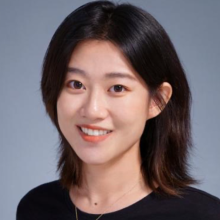
Q: What interested you in becoming a developmental scientist?
A: Growing up and through my training in social work, I’ve seen how early environments—family processes, as well as social and cultural contexts—shape people’s later health and wellbeing. This led me to developmental science, where I’m interested in generating evidence on how we can support children to have the best possible start in life, protect them from adverse experiences, and foster resilience in this changing world.
Q: Do you have a mentor or mentors who have been instrumental to your career and, if so, whom and how?
A: I do—quite a few! My Ph.D. supervisor, Dr. Shuang Lu, she's the one who introduced me to SRCD and the Asian Caucus. In the early years of my Ph.D., she provided very hands-on guidance in systematic reviews, data collection and analysis, and academic writing, while also giving me the space to design and lead my own projects. My second supervisor, Prof. Lucy Jordan, connected me with international scholars and gave me opportunities to collaborate across countries, which really broadened my understanding of developmental science in diverse Southeast Asian contexts. My current mentor, Dr. Keri McCrickerd, has been instrumental in supporting my transition toward greater independence and leadership, offering both guidance and trust to take ownership of projects and mentor others.
Q: Who or what inspires you?
A: I’m inspired by the goal of advancing health equity and improving global child health. Seeing how children’s life chances are shaped by unequal access to resources, caregiving support, and services motivates me to focus my work on populations that are often underrepresented or underserved.
Q: What does SRCD mean to you? or what is your favorite aspect of SRCD membership? As an international scholar, what interested you in becoming part of SRCD?
A: As an international scholar, I was initially drawn to the SRCD through the high-quality work published in Child Development. Attending the biennial conference twice has been especially meaningful for me—it’s been a space to exchange ideas, build connections, participate in mentoring sessions, and share my own research. I really value SRCD as a supportive and intellectually stimulating community for early career scholars.
Q: How does your cultural context influence your research perspective or approach?
A: As a woman who has studied and worked overseas for many years, I’ve developed a more open and reflexive perspective when understanding children and families from diverse cultural backgrounds. Working with populations across Asian countries, I’ve become particularly interested in how cultural values—such as familism, gender dynamics, and broader structural contexts—shape caregiver–child interactions and, ultimately, children’s developmental outcomes.
At the same time, as a Chinese scholar, I’m attuned to how rapid urbanization and globalization bring both opportunities and challenges for children—for example, long-term parent–child separation in migrant families. This has led me to think more deeply about how we can leverage family systems to support resilience among vulnerable populations.
Q: Can you share a recent publication?
A: Adaptation and validation of the Grandparental Involvement Inventory-Chinese version (GII-C) in migrant families. https://pubmed.ncbi.nlm.nih.gov/40048232/