
International Affairs Committee Member Spotlight: María Inés Susperreguy, Ph.D.
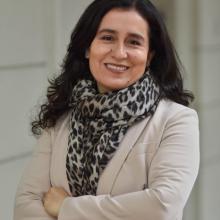
Q: Describe your current position and research agenda.
A: I received my Ph.D. in Education and Psychology from the University of Michigan in 2013. I am currently an Associate Professor in the Faculty of Education at the Pontificia Universidad Católica de Chile (PUC).
My research examines the contextual factors and individual cognitive, emotional, and motivational mechanisms that shape early math learning. I am particularly interested in how parents support the development of early math skills among children in Latin America. My work draws on interdisciplinary approaches from education, developmental psychology, and cognitive science, with the goal of informing practices and policies that support children’s learning across diverse cultural contexts.
Q: What interested you in becoming a developmental scientist?
A: I grew up and completed my schooling in southern Chile, a region characterized by socioeconomic inequality and uneven access to high-quality education. This broader context shaped my interest in contributing to children’s development and educational opportunities across diverse settings.
My interest in developmental science was further consolidated during my undergraduate studies in psychology and, in particular, through a professional practicum working with children and youth facing limited educational opportunities. This experience highlighted the importance of early developmental processes for later trajectories.
During my graduate studies in the U.S., supported by a Fulbright fellowship, I became interested in understanding how families support children’s learning prior to formal schooling. Since then, my work has focused on the role of home math experiences in shaping early mathematics skills, with the broader goal of understanding how family environments can help reduce early disparities.
Q: Do you have a mentor or mentors who have been instrumental to your career? If so, whom and how?
A: I have been very fortunate to work with outstanding mentors, both in Chile and internationally, who have been instrumental in shaping my academic career.
During my graduate training, I worked closely with my advisor, Dr. Pamela Davis-Kean, whose mentorship allowed me to engage in research examining the role of families in children’s development. Through projects involving data collection with families in Michigan, I gained valuable insight into how diverse families support early mathematical learning. I also had the opportunity to collaborate on large-scale interdisciplinary projects focused on understanding the predictors of children’s math development over time. Dr. Davis-Kean’s mentorship was fundamental in strengthening my methodological rigor and quantitative skills, while also shaping how I approach developmental research more broadly. Her generosity and guidance were especially important as I began navigating the academic world and developing as a researcher.
I have also had the privilege of working closely with Dr. Jo-Anne LeFevre, whose mentorship has been highly influential in the development of my research agenda. Through our collaboration, I deepened my understanding of how home numeracy environments shape children’s mathematics development. Her openness to collaboration and intellectual generosity have provided invaluable opportunities to expand my work. Dr. LeFevre’s mentorship has been central to refining my research focus and advancing my work in meaningful ways.
I am deeply grateful to both Dr. Davis-Kean and Dr. LeFevre for their guidance and support. They have each been exceptional role models, and their mentorship has had a lasting impact on my development as a researcher.
Q: Do you have any particular advice or tips for someone starting out in the field who is doing work in your area?
A: Given how much I have learned from working with generous collaborators and colleagues across different contexts, I would encourage emerging scholars to identify a topic that genuinely motivates them and to actively seek opportunities to collaborate with others in exploring it. Collaboration not only strengthens research by bringing diverse perspectives and expertise, but also creates valuable opportunities for learning and growth.
I would also encourage them to focus on questions that they find meaningful and that connect to real challenges in children’s development and learning, as this can increase the potential impact of their work.
Q: What words of wisdom might you pass on to someone on their very first day after deciding to pursue a Ph.D. in developmental science or a related field?
A: Pursuing a Ph.D. in developmental science is a fascinating and rewarding journey. There are many opportunities to learn from and with others and to collaborate on exciting projects, so I would encourage them to actively take advantage of these experiences and connect with colleagues who are doing inspiring work around the world.
I would also encourage them not to be afraid to engage, ask questions, seek advice, and reach out to others for collaboration. Being proactive in this way can open many opportunities and enrich both their training and their research.
Q: What does SRCD mean to you, and what is your favorite aspect of SRCD membership? As an international scholar, what interested you in becoming part of SRCD?
A: SRCD was the first scientific society I joined as a graduate student, and I have remained actively involved ever since. Over the years, I have participated in conferences and other events that have been central to my development as a researcher.
As a Latin American scholar conducting research with children, families, and educators to promote early mathematics development and more equitable learning opportunities, I value SRCD’s commitment to international representation and see important opportunities to further strengthen the visibility and participation of scholars from Latin America within the society.
Q: How does your cultural context influence your research perspective or approach?
A: My research is deeply informed by the cultural context in which it is conducted. Working in Chile and across Latin America has shaped how I think about child development, particularly the importance of understanding children’s learning within their social, cultural, and educational contexts.
Together with colleagues, I have been examining these issues more explicitly in our work, including a recent paper, “Conducting Parenting Research in Chile: Challenges and Opportunities,” published in a special issue on Majority World methods in Developmental Psychology. In this work, we highlight key methodological challenges, as well as the unique opportunities that arise when studying child development in contexts that have been historically underrepresented in the field.
Susperreguy, M. I., Aldoney, D., & Narea, M. (2026). Conducting parenting research in Chile: Challenges and opportunities. Developmental Psychology, 62(1), 108–115. https://doi.org/10.1037/dev0001873
Q: How has collaboration with international colleagues enhanced your research?
A: My research program is strongly shaped by international collaboration with colleagues across South America, including Chile and Uruguay, North America, and the UK. These collaborations have enriched my work by bringing diverse theoretical perspectives, methodological approaches, and cultural contexts to the study of early mathematics development.
Working with international colleagues has also allowed me to examine research questions across different groups and contexts, strengthening the relevance of my findings. In addition, these partnerships have created valuable opportunities to learn from others, develop joint projects, and contribute to ongoing efforts to better understand children’s development in different cultural contexts.
Q: Can you share a recent publication?
A: I am very excited to share a recent collaborative publication in Child Development, led by Dr. Shuyuan Yu. I had the opportunity to work with her and a wonderful team during my sabbatical at Carleton University. In this work, we explored how foundational mathematical abilities co-develop over time.
Yu, S., Douglas, H., Susperreguy, M. I., Merkley, R., Chitranshi, A., Kahwaji, L., Marshall, L., Rice, J., Vellan, J. E., & LeFevre., J-A. (2026). Co-developmental trajectories among comparison, ordering and arithmetic skills for students in grade 2 to grade 4. Child Development, aacag029, https://doi.org/10.1093/chidev/aacag029
Q: Is there a website or organization where people can learn more about your research?
A: https://educacion.uc.cl/cuerpo-academico/planta-ordinaria/susperreguy-maria-ines/