
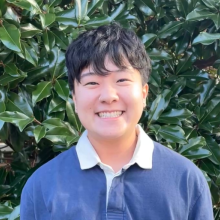
August X. Wei (he/him) is a Ph.D. student in the Human Development and Family Sciences program at the University of Delaware. He conducts developmental research on the role of family, peers, and parasocial connections in promoting positive identity development among LGBTQ young people. Most recently, he defended his Master’s thesis, an interpretative phenomenological analysis that examined these processes among a national sample of Chinese-American trans youth. Ultimately, he is interested in taking a strengths-based and intersectional approach to examining how trans youth of color find ways to challenge White-dominated narratives of trans identity and thrive amid overlapping systems of racism and cissexism.
Why did you decide to choose developmental science as a course of study or career?
A: When I was weighing my options for a PhD a couple years ago, I was between clinical psychology and human development. Frankly, at the time, my decision to matriculate into my current program boiled down to wanting to “help queer people without being a clinician.” Since then, my appreciation for (and knowledge of, I think) developmental science has considerably evolved. At the core of all my fascinations in and out of scholarly work, I want to know how and why people change over time, who plays a role in helping queer kids thrive, and how to challenge systems that perpetuate disproportionate suffering across lines of race, gender, class, and culture. Developmental science provides me with the theoretical frameworks and methodological toolkit to pose and answer these questions, as well as an intellectual home among brilliant scholars who are both personally and professionally committed to this work.
Do you have a mentor, or mentors, who have been instrumental to your career and, if so, who and how?
A: Several scholars across disciplines have played key roles in scaffolding my research pursuits and philosophies. First and foremost, my graduate advisor Dr. Eric Layland’s investment in my growth as an LGBTQ developmental scholar (and human) knows no bounds. I am endlessly grateful for his incisive brainstorming, patient instruction, and constant encouragement. His dedication as a mentor is truly aspirational. I also thank Dr. Maggi Price at Boston College and Dr. Lisa Horowitz at the National Institute of Mental Health for creating a space during my post-bac years to develop my passion for promoting trans youths’ wellbeing and systems-level change. These scientists, alongside those with whom I’ve had the privilege of connecting in the SRCD SOGIE Caucus, continually inspire me to keep uplifting queer youths’ voices, even and especially when this research is underfunded and devalued by institutions.
What advice would you give to a student beginning their Ph.D. studies in developmental science or related?
A: In today’s sociopolitical landscape (hellscape), hitting the most grueling points of your developmental research—especially “me-search” projects— can feel particularly demoralizing. At its worst, it might feel impossible and futile to continue. But when it’s hard for you to remember your “why”, others will remind you. You are surrounded by and come from a long line of scholars who believe in this work and believe in you. Lean on them and you will always find validation and rejuvenation. Relatedly, some practical writing advice I’ve received: When it feels insurmountable, pick someone to write for, every time you sit down, by name and face—for example, a research interviewee who allowed you into their inner world, or the kid version of yourself who would think you’re totally awesome. If you can’t find it in you to write for your impending deadline, I assure you it’ll be easier to write for this person.
Outside of developmental science, what hobbies or activities do you engage in or enjoy?
A: I love to read. I’d describe my favorite genres of writing as “nonfiction that feels like fiction” and “fiction that feels like nonfiction.” I can’t actually articulate what this means, but I am always on the lookout for sharp memoirs, beautiful novels, and investigative journalism. Respectively, I recently finished and highly recommend the following works: Bianca Mabute-Louie’s “Unassimilable: An Asian Diasporic Manifesto for the Twenty-First Century”, Ocean Vuong’s “Emperor of Gladness”, and Patrick Radden Keefe’s “Empire of Pain: The Secret History of the Sackler Dynasty”.