SRCD Brings Child Development AI Experts to Congress
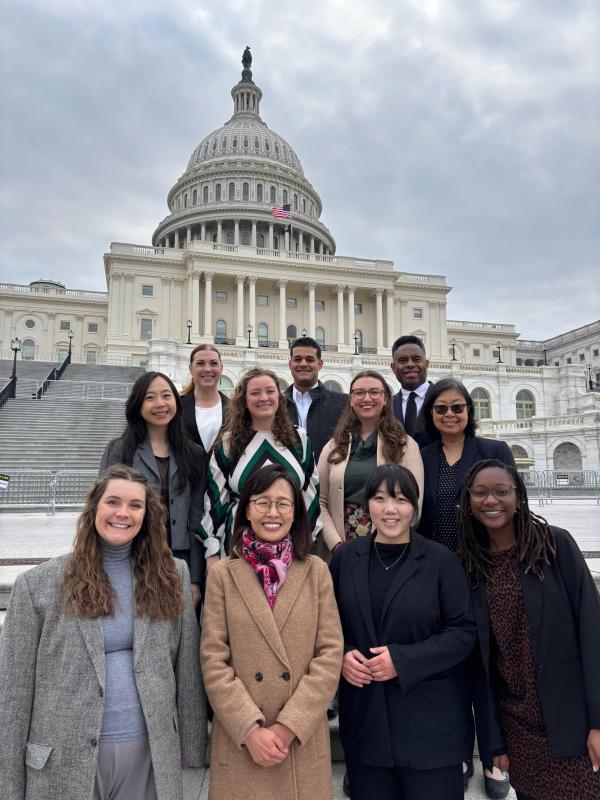
Marking a major first for the organization, eight SRCD members with expertise in artificial intelligence (AI), child development, and mental health research and practice joined SRCD’s policy team for the inaugural Congressional Briefing and the second Child Policy Connect Capitol Hill Day event.
SRCD Hosts First Congressional Briefing and Second Child Policy Connect Hill Day on Capitol Hill
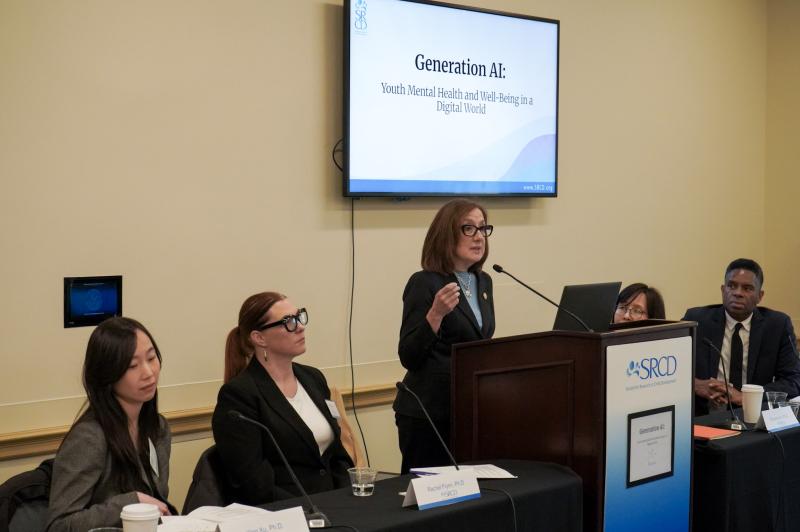
From March 18–20, 2026, eight SRCD members with expertise in AI and child development attended the second SRCD Hill Day and first Congressional briefing, held in collaboration with the U.S. Congressional Mental Health Caucus in Washington, D.C.
SRCD members met with bipartisan members of Congress across 13 Senate and House offices to bring evidence on AI, child development, and mental health into the policy process. During the briefing, they also shared the latest research in this area with nearly 60 congressional staffers and policymakers. Representative Andrea Salinas (D-OR-6), co-chair of the Congressional Mental Health Caucus, was in attendance and delivered the closing remarks for the briefing. Rep. Salinas acknowledged that the U.S. Congress has much work to do in the rapidly evolving AI landscape. She thanked SRCD and the panelists for organizing the event and sharing the latest evidence on AI and child development.
In their Science Advocacy meetings, several researchers also highlighted the importance of social science and the impact of federal cuts to research funding on our scientific community.
“Our visit to Capitol Hill was substantive, informative, and sincere,” stated Dr. Craig Watkins. “It facilitated high-level discussions about critical features of AI and its impact on youth development and mental health, provided insight into how Congress is approaching potential legislation to ensure the safety of children and teens, and involved conversations with staffers who are asking the right questions as they work responsibly to address this critical social challenge.”
Ahead of the event, a few of the participating researchers authored a policy brief, The Child Development Perspective on Artificial Intelligence: Emerging Policy Considerations for AI’s Impact on Children’s Well-Being, to provide congressional staff and briefing attendees with a short, digestible resource on the latest evidence.
During meetings with legislative staff, researchers discussed how the child development evidence base can inform AI policies on topics such as AI chatbots, education technology, AI integration in toys, and the benefits and concerns of social media use for children and adolescents. Legislative staff provided updates on bills addressing these issues, proposed ideas for future legislation, and expressed enthusiasm for building their relationships with the attending researchers.
“Throughout the day, I had the opportunity to meet with Representatives and Senators legislative directors, and other congressional staff for deep and thoughtful conversations about AI safety for children. I came away feeling optimistic. There are significant efforts underway to ensure that AI is developed and governed in ways that better protect children and adolescents,” said Dr. Pilyoung Kim.
At this fraught moment for science, several of the researchers also shared their stories of why social science matters and the impact of recent grant cancellations on the research community.
"It felt productive to be able to talk to someone directly in the policy space about my observations and experiences as someone who relies on federal funding… It was really frustrating to be in the dark for much of the first half of 2025 regarding the future status of my funding… As an early career researcher, the federal funding cuts… had the ability to entirely change the trajectory of my future scientific career… Many of the disbursements for grants like mine are still delayed… I know that one policy maker cannot change all of these issues but hearing that these kinds of obstacles were… of real importance and concern to my representatives in Congress… helped me feel more like I was moving towards better action and accountability…” shared Dr. Lauren Girouard.
SRCD recruited and fully supported attending researchers throughout the experience. After screening congressional offices, SRCD policy staff selected scholars with relevant expertise from the Child Policy Connect Community and the broader SRCD membership. Staff provided training for the scholars and facilitated all meetings. Many scholars received travel support from SRCD, with a few receiving assistance from their institutions to participate.
All of this work was made possible with significant investments from SRCD’s Governing Council and the William T. Grant Foundation.
This experience marks the beginning of mutually beneficial collaborations between scholars and policymakers. Within days of the event, researchers shared multiple resources and data points to support Congress’s work.
SRCD’s Child Policy Hub is built on a theory of change that centers policymakers’ needs. By responding in real time to policymakers’ questions and drawing upon a wide body of evidence, researchers can better promote evidence-based policymaking. Child Policy Connect and SRCD’s science advocacy initiatives help scholars learn two ways to engage with policymakers: as impartial “honest brokers” of evidence and as scientific advocates.
All SRCD members are invited to be a part of this work. Join the Child Policy Connect community on SRCD’s Commons to answer policymakers’ questions both virtually and in D.C.